
Why Sleep Is Medicine: Benefits, Complications, and How to Improve It Naturally
Overview
Sleep is not a luxury. It is a biological necessity as vital as food, water, and oxygen. Every night, while you lie still, your body becomes a silent repair laboratory repairing tissues, balancing hormones, strengthening immunity, and organizing memories. Yet in today’s fast paced world, sleep is often sacrificed first and valued last. This week on Vitalitygram, we explore why quality sleep matters, what happens when you don’t get enough, and how to restore your body’s natural rhythm.

What is sleeping?
Sleep is a natural, reversible state of reduced awareness and physical activity during which the brain and body perform essential restoration processes.
It is not simply “switching off.” In fact, the brain remains highly active, organizing memories, repairing tissues, balancing hormones, and resetting energy systems.
According to the World Health Organization, healthy sleep is a core pillar of physical, mental, and emotional well-being alongside nutrition and exercise.
If you’re not getting enough sleep or your sleep quality isn’t good, you’ll probably know it just from how you feel. Without enough quality sleep, your body and brain can’t work as they should. And there’s a whole field of medicine devoted entirely to sleep and treating conditions that affect or disrupt it.
What Happens While You Sleep: The Body’s Night Shift Explained
- Repairs muscles and tissues
- Strengthens the immune system
- Consolidates memory and learning
- Regulates hormones (growth hormone, cortisol, insulin)
- Restores brain energy and removes metabolic waste
- Supports emotional regulation
Health Risks Of Poor Sleep
When sleep becomes insufficient or poor in quality, multiple body systems begin to struggle.
1. Cognitive and Mental Effects
- Poor concentration and memory
- Reduced decision-making ability
- Mood swings, anxiety, irritability
- Increased risk of depression
The brain becomes like a phone running many apps on 5% battery.
2. Physical Health Complications
Chronic sleep deprivation is linked to:
- High blood pressure
- Heart disease
- Diabetes (impaired insulin regulation)
- Weight gain and obesity
- Weak immune response
- Chronic fatigue
3. Hormonal and Metabolic Problems
Lack of sleep disrupts hormones that control hunger:
- Increases Ghrelin (hunger hormone)
- Decreases Leptin (satiety hormone)
Result: increased cravings, especially for sugar and high-calorie foods.
4. Sleep Disorders (Common Clinical Complications)
Insomnia
Difficulty falling or staying asleep.
Sleep Apnea
Repeated breathing interruptions during sleep, causing poor oxygen supply and daytime fatigue.
Restless Legs Syndrome
Uncomfortable leg sensations creating an urge to move, disturbing sleep.
Circadian Rhythm Disorders
Sleep timing becomes misaligned with natural day-night cycles (common in shift workers or excessive screen users).
Supplements Used for Sleep
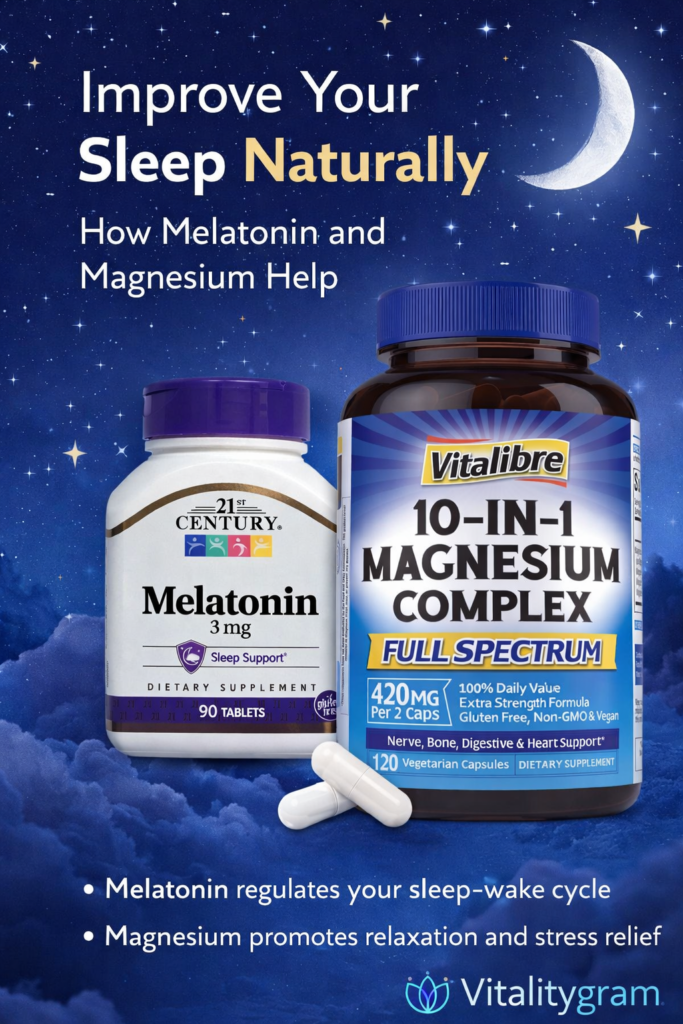
Supplements mainly support relaxation or circadian rhythm regulation. They are helpful in mild sleep disturbance, jet lag, stress-related insomnia, or irregular sleep timing.
Melatonin https://vitalitygram.com/shop/melatonin-5mg-21st-century/
Magnesium https://vitalitygram.com/shop/magnesium-glycinate-500mg/