
Zinc and Vitamin C Supplements for Colds: Do They Really Work or Is It Just Hype?
Every year, millions of people catch the common cold. The first sign is often familiar: a scratchy throat, a runny nose, sneezing, or a stubborn cough. As these symptoms appear, many people immediately reach for Vitamin C tablets, Zinc lozenges, or immune-boosting supplements, hoping to shorten the illness or prevent it from getting worse.
Walk into almost any pharmacy or supermarket, and you’ll find shelves packed with products promising to “boost immunity” or “fight colds.” Vitamin C and zinc are among the most popular ingredients in these supplements, and they are often marketed as essential weapons against seasonal illnesses. But are these claims backed by scientific evidence, or are they simply clever marketing?
The answer is more nuanced than many people think.
While both vitamin C and zinc play important roles in supporting the immune system, neither is a magic cure for the common cold. Research suggests that they may offer certain benefits under specific circumstances, but their effectiveness depends on factors such as when they are taken, the dosage used, and the individual’s overall nutritional status.
Understanding what these supplements can and cannot do is important because unnecessary or excessive use may not provide additional benefits and, in some cases, may even lead to unwanted side effects. Making informed decisions helps you spend your money wisely while supporting your health in evidence-based ways.
In this article, we’ll explore the science behind zinc and vitamin C supplements for colds. We’ll discuss how the common cold develops, how these nutrients support the immune system, what clinical studies have found, who may benefit the most, and how to use them safely.
What Causes the Common Cold?
The common cold is one of the most frequent infectious illnesses affecting people of all ages. Adults typically experience two to four colds each year, while children may develop six to eight or even more because their immune systems are still developing.
Despite its name, the common cold is not caused by exposure to cold weather alone. Instead, it is caused by viral infections that spread from one person to another.
More than 200 different viruses can cause the common cold, but the most common culprit is the rhinovirus, which accounts for approximately half of all cases. Other viruses include:
- Coronaviruses (non-COVID seasonal strains)
- Adenoviruses
- Respiratory syncytial virus (RSV)
- Human metapneumovirus
- Parainfluenza viruses
- Enteroviruses
These viruses spread mainly through respiratory droplets released when an infected person coughs, sneezes, laughs, or even talks. They can also spread through direct contact with contaminated surfaces such as door handles, mobile phones, keyboards, and shopping carts.
After entering the nose or throat, the virus begins multiplying inside the cells lining the respiratory tract. Interestingly, many of the symptoms associated with a cold are not caused directly by the virus itself but by your immune system’s response to fighting the infection.
This immune response leads to inflammation, causing symptoms such as:
- Sneezing
- Runny or blocked nose
- Sore throat
- Mild cough
- Watery eyes
- Headache
- Mild fever (more common in children)
- General fatigue
Most colds improve naturally within 7 to 10 days, although some coughs may linger for two or even three weeks.
One of the biggest misconceptions is that antibiotics can treat the common cold. Antibiotics are designed to kill bacteria, not viruses. Because colds are caused by viruses, antibiotics provide no benefit unless a secondary bacterial infection develops, such as bacterial sinusitis or pneumonia. Using antibiotics unnecessarily contributes to antimicrobial resistance, making bacterial infections harder to treat in the future.
For most healthy individuals, treatment focuses on relieving symptoms while allowing the body’s immune system to eliminate the virus naturally. This is where interest in Vitamin C and zinc supplements comes in.
Why Vitamin C?
Vitamin C, also known as ascorbic acid, is one of the most widely used dietary supplements worldwide. It is an essential water-soluble vitamin, meaning the body cannot produce or store large amounts of it. Instead, it must be obtained regularly through food or supplements.
Foods naturally rich in vitamin C include:
- Oranges
- Lemons
- Grapefruits
- Guavas
- Mangoes
- Strawberries
- Kiwi fruit
- Tomatoes
- Bell peppers
- Broccoli
- Spinach
Vitamin C is involved in hundreds of biological processes throughout the body. It is best known for supporting healthy skin and wound healing through collagen production, but it also performs several important immune functions.
Vitamin C and the Immune System
Vitamin C contributes to immune health in multiple ways.
Supports White Blood Cells
White blood cells are the body’s main defense against infections. Vitamin C helps these cells develop, function efficiently, and protect themselves from damage caused by the infection-fighting process.
Acts as a Powerful Antioxidant
During infections, the body produces molecules known as free radicals. While these molecules help destroy invading microbes, excessive amounts can damage healthy cells.
Vitamin C acts as an antioxidant by neutralizing these free radicals, reducing oxidative stress and helping protect tissues during illness.
Strengthens Physical Barriers
Your skin and the lining of your respiratory tract act as the body’s first line of defense against viruses and bacteria. Vitamin C supports collagen production, helping maintain these protective barriers.
May Reduce Inflammation
Vitamin C helps regulate certain inflammatory processes, allowing the immune system to respond effectively without causing unnecessary tissue damage.
Because of these important roles, many people assume that taking high-dose vitamin C will prevent colds entirely or rapidly cure them once symptoms begin.
However, scientific evidence tells a more balanced story.
What the Research Says About Vitamin C
Few nutrients have been studied as extensively as vitamin C in relation to the common cold.
For decades, researchers have investigated whether taking vitamin C supplements can prevent colds, reduce symptom severity, or shorten illness duration.
The results show that vitamin C is helpful in some situations, but its benefits are often smaller than popular myths suggest.
Can Vitamin C Prevent Colds?
For the average healthy adult, taking vitamin C every day does not significantly reduce the likelihood of catching a cold.
Large clinical trials have consistently shown that routine vitamin C supplementation does not prevent most people from becoming infected with cold viruses.
However, there is one important exception.
People exposed to extreme physical stress, such as marathon runners, military personnel training in cold environments, and skiers, appear to benefit more. In these groups, regular vitamin C supplementation has been associated with a reduced risk of developing colds.
This suggests that vitamin C may be particularly useful when the immune system is under unusually high levels of physical stress.
Can Vitamin C Shorten a Cold?
This is where vitamin C appears to offer modest benefits.
Research indicates that people who take vitamin C regularly before becoming ill may experience slightly shorter colds compared with those who do not.
On average, studies suggest:
- Adults may recover about 8% faster.
- Children may recover about 14% faster.
Although this may translate into only several hours to about one day less illness for many people, even a modest reduction in symptoms can be valuable, especially for those with busy schedules or recurring colds.
Does Taking Vitamin C After Symptoms Start Help?
Many people only begin taking vitamin C after developing a sore throat or runny nose.
Unfortunately, research has found that starting vitamin C after symptoms begin usually provides little or no meaningful benefit in reducing the duration or severity of the illness for most people.
This finding surprises many consumers because numerous over-the-counter cold products are advertised for use once symptoms appear.
Current evidence suggests that vitamin C works better as part of a consistently healthy diet or regular supplementation rather than as an emergency treatment started after illness begins.
What About High-Dose Vitamin C?
Some individuals take extremely high doses of vitamin C during colds, believing that “more is better.”
However, once the body’s tissues become saturated, excess vitamin C is largely excreted in urine. Taking very large doses does not necessarily improve effectiveness and may increase the risk of side effects such as stomach cramps, nausea, diarrhea, and, in susceptible individuals, kidney stones.
For most adults, obtaining vitamin C through a balanced diet and using supplements only when appropriate is a safer and more practical approach.
The Bottom Line on Vitamin C
Vitamin C is unquestionably essential for a healthy immune system, but it should not be viewed as a miracle cure for the common cold.
Current scientific evidence suggests that:
- It supports normal immune function.
- It does not reliably prevent colds in the general population.
- Regular supplementation may slightly shorten the duration of a cold.
- Starting supplementation only after symptoms appear offers little benefit for most people.
- Excessively high doses are unlikely to provide additional advantages and may increase the risk of side effects.
In the next section, we’ll examine zinc, another popular cold remedy that has attracted significant scientific attention and may play a different role in reducing the duration of common cold symptoms.
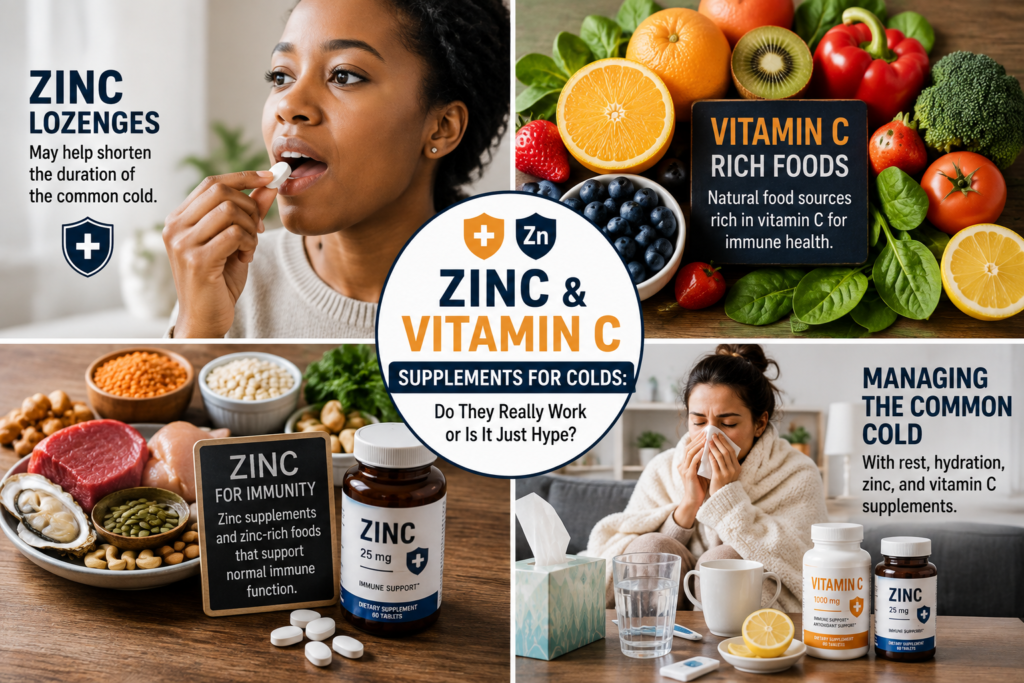
Why Zinc?
While vitamin C often steals the spotlight when it comes to immune health, zinc has emerged as one of the most extensively studied minerals for the treatment of the common cold. Unlike vitamin C, whose benefits are generally modest, zinc appears to have a more direct effect on the viruses that cause colds and the immune system’s response to infection.
Zinc is an essential trace mineral required for the activity of more than 300 enzymes in the body. It plays a crucial role in:
- Supporting normal immune function
- Promoting wound healing
- DNA and protein synthesis
- Cell growth and division
- Maintaining the senses of taste and smell
Since the body cannot store large amounts of zinc, it must be obtained regularly through food or supplements.
Food Sources of Zinc
Many everyday foods are naturally rich in zinc, including:
- Beef and lean red meat
- Chicken and turkey
- Fish and seafood (especially oysters, which are exceptionally rich in zinc)
- Eggs
- Dairy products
- Beans and lentils
- Pumpkin seeds
- Cashew nuts
- Whole grains
People who follow vegetarian or vegan diets may require slightly higher zinc intakes because plant compounds called phytates can reduce zinc absorption.
What the Research Says About Zinc
For many years, scientists have investigated whether zinc supplements can shorten the duration or reduce the severity of common cold symptoms.
Unlike vitamin C, the evidence for zinc is generally stronger, although results vary depending on the type of zinc used, the dose, and how soon treatment begins.
Zinc May Shorten the Duration of a Cold
Several systematic reviews and meta-analyses have found that zinc supplements, particularly zinc lozenges, may reduce the duration of common cold symptoms if started within 24 hours of symptom onset.
Some studies suggest that zinc may shorten a cold by approximately one to two days. This benefit appears to be greatest when zinc is taken early, before the virus has had time to multiply extensively.
However, zinc is not a cure. It does not eliminate the virus overnight, nor does it guarantee that symptoms will disappear quickly.
Does Zinc Prevent Colds?
Unlike vaccines, zinc does not prevent infection.
Current evidence does not support taking zinc year-round solely to avoid catching colds. Instead, zinc appears to work best as an early treatment after symptoms begin rather than as a preventive supplement for healthy individuals.
How Might Zinc Work?
Researchers believe zinc may help in several ways:
- It may interfere with the ability of certain cold viruses to replicate.
- It may reduce inflammation in the upper respiratory tract.
- It supports the development and activity of immune cells that fight infection.
- It may help protect the cells lining the nose and throat during viral illness.
Although these mechanisms are promising, researchers continue to investigate exactly how zinc produces its effects in humans.
Can You Take Zinc and Vitamin C Together?
One of the most common questions pharmacists receive is whether zinc and vitamin C can be taken together.
The answer is yes.
There is no evidence that these nutrients interfere with each other when taken at recommended doses. In fact, many over-the-counter immune-support supplements combine both ingredients because they support immune health through different mechanisms.
Vitamin C primarily supports immune cell function and acts as an antioxidant, while zinc plays a direct role in immune signaling and may help reduce the duration of cold symptoms when started early.
Taking them together should not be viewed as a guaranteed cure. Instead, they should be considered supportive measures alongside adequate rest, hydration, nutritious meals, and symptom-relieving treatments.
Recommended Dosage
Always follow the dosage instructions provided on the product label or those given by your healthcare professional.
Vitamin C
The Recommended Dietary Allowance (RDA) for adults is:
- Men: 90 mg daily
- Women: 75 mg daily
Many supplements contain 500 mg or 1000 mg, which exceeds the daily requirement. While these doses are commonly available, higher amounts do not necessarily provide greater benefits against colds.
The tolerable upper intake level for adults is 2,000 mg per day. Regularly exceeding this amount increases the risk of side effects.
Zinc
The RDA is:
- Adult men: 11 mg daily
- Adult women: 8 mg daily
During studies on the common cold, researchers have often used higher short-term doses under controlled conditions. However, prolonged use of high-dose zinc is not recommended because it may interfere with copper absorption and lead to deficiency.
The tolerable upper intake level for adults is 40 mg of elemental zinc per day, unless otherwise advised by a healthcare professional.
Drug Interactions
Some supplements can interact with medications.
Zinc may reduce the absorption of:
- Tetracycline antibiotics
- Quinolone antibiotics
- Penicillamine (used for rheumatoid arthritis and Wilson disease)
To reduce these interactions, zinc supplements are usually taken at least two hours before or four to six hours after these medications.
Vitamin C
Vitamin C has relatively few clinically significant interactions but may influence certain laboratory tests or interact with specific medicines in some individuals.
If you have a chronic medical condition or take prescription medications, consult your healthcare provider or pharmacist before starting supplements.
Beyond Supplements: Other Ways to Recover Faster
While supplements may provide modest benefits, they work best as part of a broader recovery plan.
Practical measures include:
- Drinking plenty of fluids to stay hydrated.
- Getting adequate sleep to support immune function.
- Eating a balanced diet rich in fruits, vegetables, lean proteins, and whole grains.
- Using saline nasal sprays or drops to relieve nasal congestion.
- Gargling with warm salt water to soothe a sore throat.
- Taking medicines such as paracetamol or ibuprofen (where appropriate) to reduce fever and relieve pain.
Remember that antibiotics should not be used to treat uncomplicated viral colds.
Seek medical attention if symptoms become severe, last longer than expected, or include difficulty breathing, persistent high fever, chest pain, or confusion.
Beyond Supplements: Other Ways to Recover Faster
While supplements may provide modest benefits, they work best as part of a broader recovery plan.
Practical measures include:
- Drinking plenty of fluids to stay hydrated.
- Getting adequate sleep to support immune function.
- Eating a balanced diet rich in fruits, vegetables, lean proteins, and whole grains.
- Using saline nasal sprays or drops to relieve nasal congestion.
- Gargling with warm salt water to soothe a sore throat.
- Taking medicines such as paracetamol or ibuprofen (where appropriate) to reduce fever and relieve pain.
Remember that antibiotics should not be used to treat uncomplicated viral colds.
Seek medical attention if symptoms become severe, last longer than expected, or include difficulty breathing, persistent high fever, chest pain, or confusion.
You can Actually get all these supplements from www.vitalitygram/shop we do same day deliveries across the country